Divine Library is a free online public library that includes free eBook downloads and free audio books.
We work with New Thought Seekers and Sharers around the world
insuring that all New Thought Texts in the Public Domain
are available for you to read on the web for free, forever!
"Unlike so many, we do not peddle the word of God for profit."
~ 2 Corinthians 2:17
Navigate through this book by clicking Next Page or Previous
Page below the text of the page & jump directly to chapters using the chapter numbers above the text.
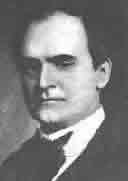
Serving New Thought is pleased to present
William Atkinson's
Art Of Logical Thinking
Book page numbers, along with the number to the left of the .htm extension match the page numbers of the original books to ensure easy use in citations for research papers and books
1 - Reasoning -
2 - Process of Reasoning -
3 - The Concept -
4 - The Use of Concepts -
5 - Concepts and Images -
6 - Terms -
7 - Meaning of Terms -
8 - Judgments -
9 - Propositions -
10 - Immediate Reasoning -
11 - Inductive Reasoning -
12 - Reasoning by Induction -
13 - Theory and Hypotheses -
14 - Making and Testing Hypotheses -
15 - Deductive Reasoning -
16 - The Syllogism -
17 - Varieties of Syllogisms -
18 - Reasoning by Analogy -
19 - Fallacies -
is the step of Denomination. By Denomination we mean "the act of naming or designating by a name." A name is the symbol by
which we think of a familiar thing without the
necessity for making a distinct mental image
upon each occasion of thought. Or, it may be
considered as akin to a label affixed to a thing.
As in the case of the algebraic symbols, a, b, c,
x, and y, by the use 'of which we are able to
make intricate calculations easily and rapidly,
so may we use these word symbols much more
readily than we could the lengthy descriptions
or even the mental images of the thing symbolized. It is much easier for us to think
"horse" than it would be to think the full
definition of that animal, or to think of it by
recalling a mental picture of the horse each
time we wished to think of it. Or, it is much
better for us to be able to glance at a label on
a package or bottle than to examine the contents in detail. As Hobbes says: "A word
taken at pleasure to serve for a mark, which
may raise in our minds a thought like to some
thought we had before, and which being pronounced to others, may be to them a sign of
what thought the speaker had or had not,
page scan
35
PREVIOUS PAGE -
NEXT PAGE