NewThoughtLibrary.com provides free New Thought metaphysical books to the entire world.
New Thought - Ancient Wisdom can be taught and learned anywhere in the world using books from this library.
No membership! No cookies! Just a simple free public library to help you on your journey.
To insure your easy accessiblity to the library system, there are mirrors circling the planet
mirrors:
NewThoughtLibrary.com - USA - Central /
NewThoughtLibrary.info / Singapore,
NewThoughtLibrary.org - Europe /
NewThoughtLibrary.net USA - East
Index of Classic New Thought Authors or Index of New Thought Archives / Books
We connect seekers with New Thought sharers around the globe:
New Thought Classes
to support "conscious evolution" through New Thought - Ancient Wisdom.
Divine Library is a free online public library that includes free eBook downloads and free audio books.
We work with New Thought Seekers and Sharers around the world insuring that all New Thought Texts in the Public Domain are available for you to read on the web for free, forever!
"Unlike so many, we do not peddle the word of God for profit."
~ 2 Corinthians 2:17
Navigate through this book by clicking Next Page or Previous Page below the text of the page & jump directly to chapters using the chapter numbers above the text.
Serving New Thought is pleased to present
Art Of Logical Thinking
Book page numbers, along with the number to the left of the .htm extension match the page numbers of the original books to ensure easy use in citations for research papers and books
1 - Reasoning - 2 - Process of Reasoning - 3 - The Concept - 4 - The Use of Concepts - 5 - Concepts and Images - 6 - Terms - 7 - Meaning of Terms - 8 - Judgments - 9 - Propositions - 10 - Immediate Reasoning - 11 - Inductive Reasoning - 12 - Reasoning by Induction - 13 - Theory and Hypotheses - 14 - Making and Testing Hypotheses - 15 - Deductive Reasoning - 16 - The Syllogism - 17 - Varieties of Syllogisms - 18 - Reasoning by Analogy - 19 - Fallacies -
if it is advanced with the idea of deceiving others it constitutes a Sophism."
The reason for Rule I is that only three propositions—a Major Premise, a Minor Premise, and a Conclusion—are needed to form a Syllogism. If we have more than three propositions, then we must have more than two premises from which to draw one conclusion. The presence of more than two premises would result in the formation of two or more Syllogisms, or else in the failure to form a Syllogism.
II. That there should be three and no more than three Terms. These Terms are (1) The Predicate of the Conclusion; (2) the Subject of the Conclusion; and (3) the Middle Term which must occur in both premises, being the connecting link in bringing the two other Terms together in the Conclusion.
The Predicate of the Conclusion is called the Major Term, because it is the greatest in extension compared with its fellow terms. The Subject of the Conclusion, is called the Minor Term because it is the smallest in extension compared with its fellow terms. The Major and Minor Terms are called the Extremes
160
"Be The Change" Volunteer program.
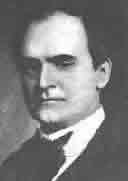
eBook downloads for William Atkinson's Art Of Logical Thinking include: pdf, Open eBook, OEB, ePub & audio book MP3
Can't find a
New Thought Center near you?
Divine Life Center provides online New Thought Services
or you can create your own New Thought Study Group
Team Credits for this text: