Divine Library is a free online public library that includes free eBook downloads and free audio books.

We work with New Thought Seekers and Sharers around the world insuring that all New Thought Texts in the Public Domain are available for you to read on the web for free, forever!

"Unlike so many, we do not peddle the word of God for profit."
~ 2 Corinthians 2:17

Navigate through this book by clicking Next Page or Previous Page below the text of the page & jump directly to chapters using the chapter numbers above the text.

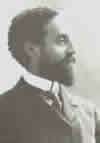
Horatio Dresser was a major early New Thought author

Serving New Thought is pleased to present

Horatio W. Dresser's

Education and the Philosophical Ideal

"Evolution is better than Revolution. New Thought Library's New Thought Archives encompass a full range of New Thought from Abrahamic to Vedic. New Thought literature reflects the ongoing evolution of human thought. New Thought's unique inclusion of science, art and philosophy presents a dramatic contrast with the magical thinking of decadent religions that promulgate supersticions standing in the way of progress to shared peace and prosperity." ~ Avalon de Rossett

Your PayPal contributions insure this gift lasts forever. Please consider an ongoing PayPal subscription.


Preface - Introduction - The New Point of View - Educational Ideals - Equanimity - The Subconscious Mind - The Spiritual Ideal in Childhood - An Experiment in Education - The Expression of the Spirit - An Ideal Summer Conference - The Ministry of the Spirit - The Mystery of Pain and Evil - The Philosophical Ideal - The Criteria of Truth - Organic Perfection - Immortality - Index - p. 247


more for those teachers who appeal to their credulity than for those who inspire thought. People like to believe, to gather about those who deal in ready made convictions. Consequently, the truth-seeker is condemned because he does not speak out convincingly. He is charged with " threshing his oats in public," when, as matter of fact, he has already thought too deeply to ally himself with any particular theory. But Socrates was the wisest of Greeks because he knew and said that he knew nothing.

It is the superficial teacher who deals only in convictions, never in doubts; who tells what God is and all about life and the soul. He who has truly begun to philosophise knows that all our knowledge is hypothetical. We are proceeding on certain highly probable assumptions, and taking the rest on faith, in the belief that the universe will not prove disappointing.

The little child can ask questions which the wisest of on cannot answer. We may hazard an answer. But it is usually a mere x, a skilful formula to conceal ignorance. In reality, all our knowledge, even our philosophy, is still relative: we know only so far as individual reason has penetrated. Beyond our present life and thought, in other conditions or on other planets, what do we know? Even the idea of God, varying from age to age, is man's attempt to describe a reality corresponding to his highest emotion and thought. While man believes his thought of God to be an infallible revelation, he deceives himself and deceives others. When he

page scan

165


PREVIOUS PAGE - NEXT PAGE

Support New Thought Library so that we can continue our work 
of putting all public domain New Thought texts at your fingertips for free!