NewThoughtLibrary.com
presents Love, Life and Work by Elbert Hubbard, along with mp3's, eBooks and more...
Love, Life and Work Elbert Hubbard
More New Thought Resources:









New Thought Library is an online public library with free downloads.
"Unlike so many, we do not peddle the Divine word for profit."
~ 2 Corinthians 2:17

Serving New Thought is pleased to present
Love, Life and Work
"Evolution is better than Revolution. New Thought Library's New Thought Archives encompass a full range of New Thought media from Abrahamic to Vedic reflecting the ongoing evolution of human thought. New Thought's unique inclusion of science, art and philosophy contrasts with 'old thought' Religion. Today's 'New Thought 3.0' teaches personal responsibility, self-development, human rights and compassionate action as essential spiritual paradigms." ~ Avalon de Rossett
Contents - A Prayer - Life and Expression - Time and Chance - Psychology of a Religious Revival - One-Man Power - Mental Attitude - The Outsider - Get Out or Get in Line - The Week-Day, Keep it Holy - Exclusive Friendships - The Folly of Living in the Future - Spirit of Man - Art and Religion - Initiative - The Disagreeable Girl - The Neutral - Reflections on Progress - Sympathy, Knowledge and Poise - Love and Faith - Giving Something for Nothing - Work and Waste - The Law of Obedience - Society's Saviors - Preparing for Old Age - Alliance With Nature - The Ex. Question - Sergeant - Spirit of the Age - Grammarian - The Best Religion
This library should make your reading, research and writing projects easier. Fully processed books have yellow page scan links to check text accuracy. File numbers for .jpg and .htm files etc... match the original page numbers for accuracy and ease of use. This enables writers to create reference links for research or publication. Use it, send in additions and keep in mind that your support means more free books, better processing and more downloads.

Preparing for Old Age
Socrates was once asked by a pupil, this question: "What kind of people shall we be when we reach Elysium?"
And the answer was this: "We shall be the same kind of people that we were here."
If there is a life after this, we are preparing for it now, just as I am to-day preparing for my life to-morrow.
What kind of a man shall I be to-morrow? Oh, about the same kind of a man that I am now. The kind of a man that I shall be next month depends upon the kind of a man that I have been this month.
If I am miserable to-day, it is not within the round of probabilities that I shall be supremely happy to-morrow. Heaven is a habit. And if we are going to Heaven we would better be getting used to it.
Life is a preparation for the future; and the best preparation for the future is to live as if there were none.
We are preparing all the time for old age. The two things that make old age beautiful are resignation and a just consideration for the rights of others.
In the play of Ivan the Terrible, the interest centers around one man, the Czar Ivan. If anybody but Richard Mansfield played the part, there would be nothing in it. We simply get a glimpse into the life of a tyrant who has run the full gamut of goosedom, grumpiness, selfishness and grouch. Incidentally this man had the power to put other men to death, and this he does and has done as his whim and temper might dictate. He has been vindictive, cruel, quarrelsome, tyrannical and terrible. Now that he feels the approach of death, he would make his peace with God. But he has delayed that matter too long. He didn't realize in youth and middle life that he was then preparing for old age.
Man is the result of cause and effect, and the causes are to a degree in our hands. Life is a fluid, and well has it been called the stream of life -- we are going, flowing somewhere. Strip Ivan of his robes and crown, and he might be an old farmer and live in Ebenezer. Every town and village has its Ivan. To be an Ivan, just turn your temper loose and practise cruelty on any person or thing within your reach, and the result will be a sure preparation for a querulous, quarrelsome, pickety, snipity, fussy and foolish old age, accented with many outbursts of wrath that are terrible in their futility and ineffectiveness.
Babyhood has no monopoly on the tantrum. The characters of King Lear and Ivan the Terrible have much in common. One might almost believe that the writer of Ivan had felt the incompleteness of Lear, and had seen the absurdity of making a melodramatic bid for sympathy in behalf of this old man thrust out by his daughters.
Lear, the troublesome, Lear to whose limber tongue there was constantly leaping words unprintable and names of tar, deserves no soft pity at our hands. All his life he had been training his three daughters for exactly the treatment he was to receive. All his life Lear had been lubricating the chute that was to give him a quick ride out into that black midnight storm.
"Oh, how sharper than a serpent's tooth it is to have a thankless child," he cries.
There is something quite as bad as a thankless child, and that is a thankless parent -- an irate, irascible parent who possesses an underground vocabulary and a disposition to use it.
The false note in Lear lies in giving to him a daughter like Cordelia. Tolstoy and Mansfield ring true, and Ivan the Terrible is what he is without apology, excuse or explanation. Take it or leave it -- if you do not like plays of this kind, go to see Vaudeville.
Mansfield's Ivan is terrible. The Czar is not old in years -- not over seventy -- but you can see that Death is sniffing close upon his track. Ivan has lost the power of repose. He cannot listen, weigh and decide -- he has no thought or consideration for any man or thing -- this is his habit of life. His bony hands are never still -- the fingers open and shut, and pick at things eternally. He fumbles the cross on his breast, adjusts his jewels, scratches his cosmos, plays the devil's tattoo, gets up nervously and looks behind the throne, holds his breath to listen. When people address him, he damns them savagely if they kneel, and if they stand upright he accuses them of lack of respect. He asks that he be relieved from the cares of state, and then trembles for fear his people will take him at his word. When asked to remain ruler of Russia he proceeds to curse his councilors and accuses them of loading him with burdens that they themselves would not endeavor to bear.
He is a victim of amor senilis, and right here if Mansfield took one step more his realism would be appalling, but he stops in time and suggests what he dares not express. This tottering, doddering, slobbering, sniffling old man is in love -- he is about to wed a young, beautiful girl. He selects jewels for her -- he makes remarks about what would become her beauty, jeers and laughs in cracked falsetto. In the animality of youth there is something pleasing -- it is natural -- but the vices of an old man, when they have become only mental, are most revolting.
The people about Ivan are in mortal terror of him, for he is still the absolute monarch -- he has the power to promote or disgrace, to take their lives or let them go free. They laugh when he laughs, cry when he does, and watch his fleeting moods with thumping hearts.
He is intensely religious and affects the robe and cowl of a priest. Around his neck hangs the crucifix. His fear is that he will die with no opportunity of confession and absolution. He prays to High Heaven every moment, kisses the cross, and his toothless old mouth interjects prayers to God and curses on man in the same breath.
If any one is talking to him he looks the other way, slips down until his shoulders occupy the throne, scratches his leg, and keeps up a running comment of insult -- "Aye," "Oh," "Of course," "Certainly," "Ugh," "Listen to him now!" There is a comedy side to all this which relieves the tragedy and keeps the play from becoming disgusting.
Glimpses of Ivan's past are given in his jerky confessions -- he is the most miserable and unhappy of men, and you behold that he is reaping as he has sown.
All his life he has been preparing for this. Each day has been a preparation for the next. Ivan dies in a fit of wrath, hurling curses on his family and court -- dies in a fit of wrath into which he has been purposely taunted by a man who knows that the outburst is certain to kill the weakened monarch.
Where does Ivan the Terrible go when Death closes his eyes?
I know not. But this I believe: No confessional can absolve him -- no priest benefit him -- no God forgive him. He has damned himself, and he began the work in youth. He was getting ready all his life for this old age, and this old age was getting ready for the fifth act.
The playwright does not say so, Mansfield does not say so, but this is the lesson: Hate is a poison -- wrath is a toxin -- sensuality leads to death -- clutching selfishness is a lighting of the fires of hell. It is all a preparation -- cause and effect.
If you are ever absolved, you must absolve yourself, for no one else can. And the sooner you begin, the better.
We often hear of the beauties of old age, but the only old age that is beautiful is the one the man has long been preparing for by living a beautiful life. Every one of us are right now preparing for old age.
There may be a substitute somewhere in the world for Good Nature, but I do not know where it can be found.
The secret of salvation is this: Keep Sweet.

PREVIOUS PAGE - 24 - NEXT PAGE


Links to Additional Media for Love, Life and Work by Elbert Hubbard such as audio and ebooks are located at the bottom of this web page.
FindACenter.com
Discover a rainbow of exciting New Thought Communities around the corner and around the globe.
Find FellowshipDivine Journal
Daily Wisdom from today's New Thought Leaders supports your Spiritual Journey with insights and affirmations.
Daily WisdomNew Thought Talks
Interviews with New Thought Sharers around the world & explorations of current themes in New Thought
New Thought Talks-

NewThought.NET/work
Manifest Your Dreams
Processing credits for Love, Life and Work by Elbert Hubbard"Together we make a difference."
This is Ancient Wisdom.
"Diversity is strength!"
Register NOW
NewThought.NET/work = the Power of WE -
NewThought.NET/work
Manifest Your Dreams
Processing credits for Love, Life and Work by Elbert HubbardNew Thought Leaders "are life long learners"
Learn the hidden wisdom.
Library patrons support the library and get first notices and more ...
Register NOW
NewThought.NET/work = the Power of WE
Great New Thought Resources:










A Powerful Collection of Spiritual Resources
We give you a powerful platform upon which to do God's Work learning and sharing New Thought:
DivineJournal.com, NewThoughtCommunity.com, NewThoughtTao.com and many more ...
Use DivineJournal.com to Research, read & write New Thought Texts which you can share through NewThoughtBook.info.
New Thought Resources accessible to anyone in the world with an internet connection.
Find New Thought Communities around the corner & around the world.
FindACenter.com, NewThoughtCentres.com, NewThoughtCenters.com
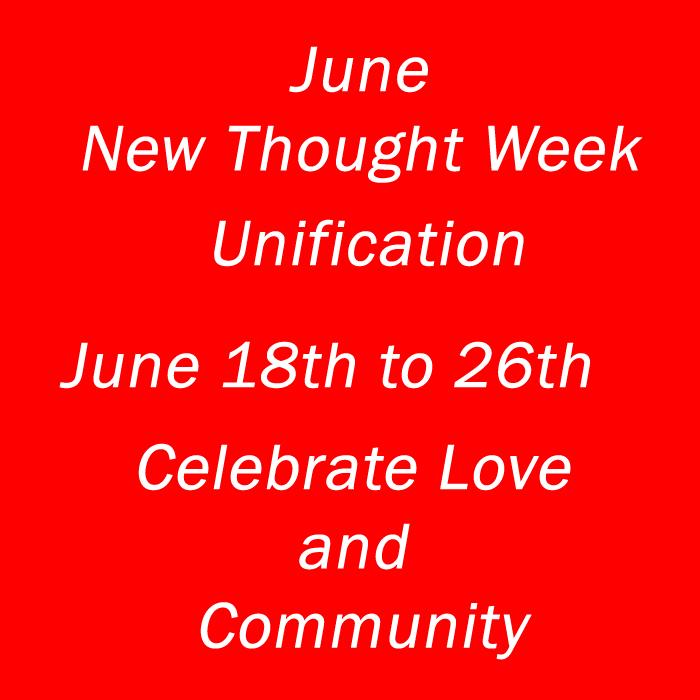
Celebrating New Thought Diversity in thought and form, we weather all storms, thrive and prosper! NewThoughtDay.com, NewThoughtWeek.com
New Thought Holidays
New Thought Day was declared by James Edgerton on August 23rd, 1915
During research while expanding the free New Thought Library,
one of the ministers came across an interesting quote from early New Thought Alliance President James A. Edgerton:
"'The truth, once announced, has the power not only to renew but to extend itself.
New Thought is universal in its ideals and therefore should be universal in its appeal.
Under the guidance of the spirit, it should grow in good works until it embraces many lands and eventually the whole world.'
~
New Thought Day, August 23rd
, 1915."




NewThought.NET/work Serving New Thought
A growing collection of resources supported by a vast and expanding team of volunteers around the globe.

New Thought Radio
Talks by New Thought Spiritual LeadersUplifting Messages from New Thought Communities around the world.
Listen to New Thought Radio broadcasts from the New Thought Streams PodCast Archive, along with a growing collection of New Thought Music directly from New Thought Artists around the world.
Listen to New Thought Radio 24/7/365
New Thought Day
August 23rd
100 years old
1st declared by James Edgerton in 1915
"'The truth, once announced, has the power not only to renew but to extend itself. New Thought is universal in its ideals and therefore should be universal in its appeal. Under the guidance of the spirit, it should grow in good works until it embraces many lands and eventually the whole world.' ~ James A. Edgerton, New Thought Day, August 23rd, 1915."
New Thought Holidays August 23rd
DivineTao.com ~ since 2003
Be as water, as you are ...The New Thought Tao
Explore the New Thought Tao and discover deeper wisdom. New Thought has many forms, Taoist New Thought brings insights to the table that are not so apparent in Abrahamic forms. While many Abrahamics fight to impose their views on the rest of the world. Taoist New Thought teaches the way of acceptance and understanding. Principles in the New Thought Tao provide powerful processes which serve as keys to deeper happiness and inner peace from the inside out.
Read Divine Tao #8 "Water" Tao #8
New Thought Conferences
Grow and thrive Share your truthNew Thought conferences from various New Thought denominations and organizations are happening all ove rthe world. Whether Old New Thought or New Thought Today, find conference info about New Thought Conferences!.
New Thought Conferences Share
New Thought Solutions
Conscious Ministry Grow and thrive!New Thought Solutions for New Thought Sharers and New Thought Communities. Empowerment programs that awaken us to the co-creative "Power of We." Grow and thrive sharing a rainbow of New Thought wisdom with the world.
New Thought Solutions Thrive!
Books from contemporary New Thought Writers
NewThoughtBook.infoA growing collection of New Thought books from Today's New Thought Leaders. Many New Thought books lack the marketing necessary to get them in front of you, with New Thought Books INFO those writers to find you and you to find those writers...
New Thought Books Read!